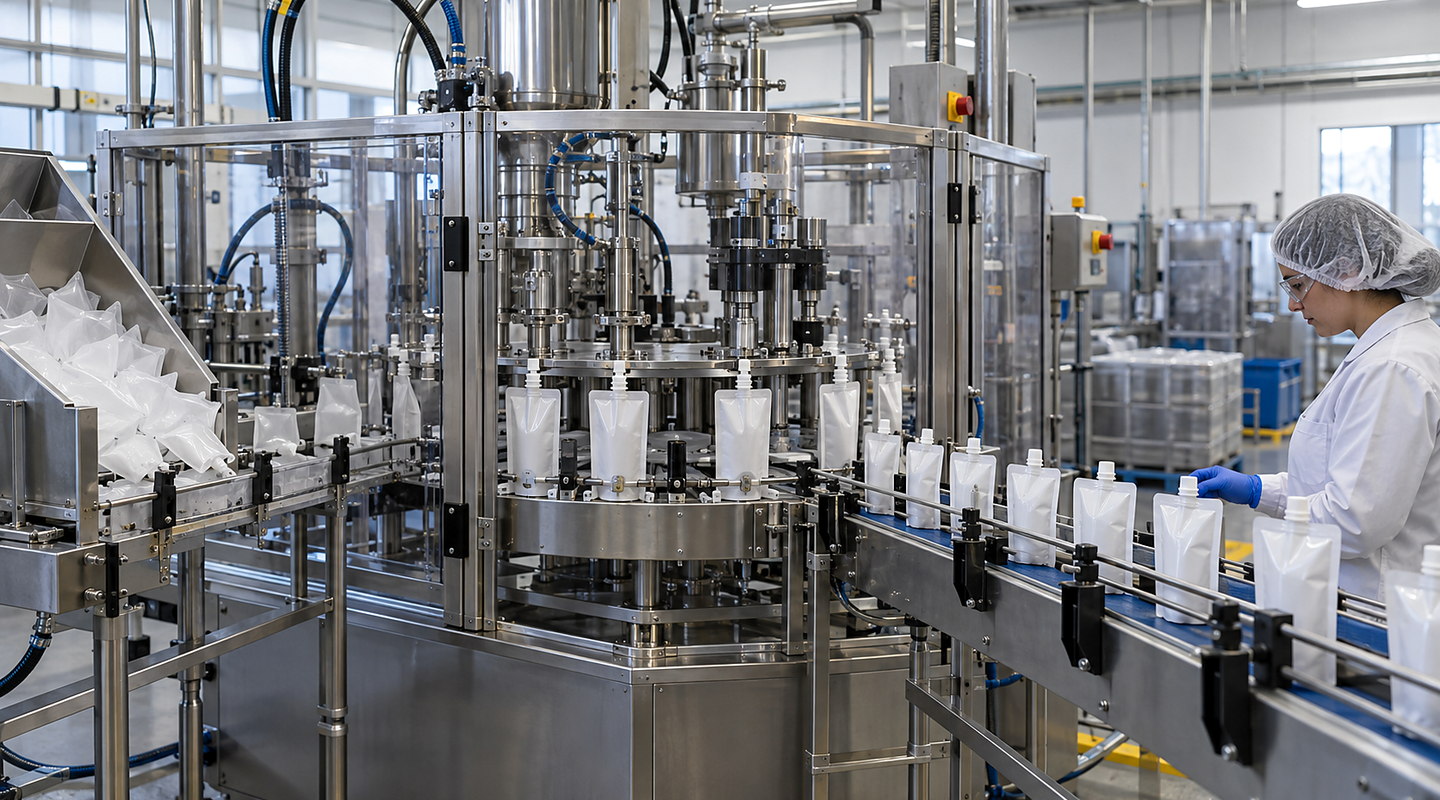
Premade Pouch Packers: How the Process Works
Follow premade pouches through presentation, opening, dosing, closing and accepted discharge. Trial opening faults, product entry, seal clearance and recovery.
A premade pouch trial follows empty-pouch presentation and pickup, opening, permission to dose, product entry and closing through to the accepted finished pack. Record missing, doubled or skewed pouches separately from incomplete opening, dosing and seal-area problems.
Bring the identified pouch and product samples and agree the stage-by-stage trial record. Count accepted completed packs over the intended job pattern, including pouch loading, product replenishment, stops and format changes.
Understand the complete route from input to accepted output — Premade Pouch Packers
Plan premade pouch packers around your product, pack range, target output, cleaning needs and finished-pack checks. Discuss a practical line concept with Lancing using representative samples. Follow the material or part through each operating step and include recovery, cleaning and change in the real cycle.
Discuss your application

Four clear stages for premade pouch packers
At each stage, you can review how premade pouch opening, filling & sealing product behaviour and finished-pack checks and reject handling affect the next commitment.
- 01
Review Representative Product and Pack Samples
Share representative product and pack samples, including the normal range for premade pouch opening, filling & sealing product behaviour and the difficult container, bag or pack range cases.
- 02
Trial the Dosing, Handling or Closing Method
Compare suitable methods and use focused trials to show how each option performs against target dose, count or pack weight.
- 03
Integrate Infeed, Discharge, Controls and Access
Connect the equipment to your line, services and controls while resolving required output and production pattern for day-to-day operation.
- 04
Run Agreed Production and Changeover Checks
Confirm cleaning, access and changeover method, then complete and record finished-pack checks and reject handling before your operating team takes over.
Decisions and results stay connected
| Stage | What happens | What you can review |
|---|---|---|
| Identify pouch supply and product samples | Record pouch construction, supplier/batch, loading condition, dimensions, gusset and any zip/spout features. Supply representative product conditions and fill sizes. | Sample identities, usable opening/gripping/closing areas, production pattern and agreed finished-pack criteria. |
| Trial pickup, opening and product entry | Observe missing, doubled or skewed pouches and what establishes a sufficiently open filling path. Check chute/nozzle access and product across the future closing area. | Stage of first failure, opening/dose-permission decision, individual fill observations and retained difficult samples. |
| Connect closing, discharge and exceptions | Agree the closing interface, completed-pack checks, ready/fault states and how filled but unclosed or unconfirmed pouches are handled. | Interface responsibilities, pack/result association where included, accepted/held/rejected decisions and controlled restart. |
| Run replenishment and format changes | Include normal pouch loading, product replenishment, stops and the approved clearance/changeover sequence. Check first accepted packs after restart. | Accepted completed-pack output, interventions, part-completed pack reconciliation, settings and untested conditions. |
Keep connected responsibilities clear
Your final premade pouch packers scope must also account for cleaning, access and changeover method, finished-pack checks and reject handling, current regulations and the conditions at your site.
- The selected method must be trialled with representative product and packaging.
- Supplier tolerances and product-condition changes can alter handling or fill behaviour.
- Equipment selection does not replace product, hygiene, packaging or regulatory validation.